
Dewen Cheng: 2009 Awardee
Michael Kidger Memorial Scholarship
College of Optoelectronics
Beijing Institute of Technology
Dewen Cheng, a PhD candidate at the College of Optoelectronics, Beijing Institute of Technology, was selected as the 2009 Michael Kidger Memorial Scholarship awardee. Dewen’s thesis supervisor, a Fellow of SPIE, is Professor Yongtian Wang of the Beijing Institute of Technology. Dewen is currently conducting his research work at the College of Optical Sciences, University of Arizona, under a joint education program. Dr. Hong Hua of the University of Arizona is his co-supervisor.
The award was presented at SPIE’s Optics+Photonics conference, 2 – 6 August 2009, San Diego Convention Center, San Diego, California by Andy Wood, Kidger Scholarship Committee Chairman.
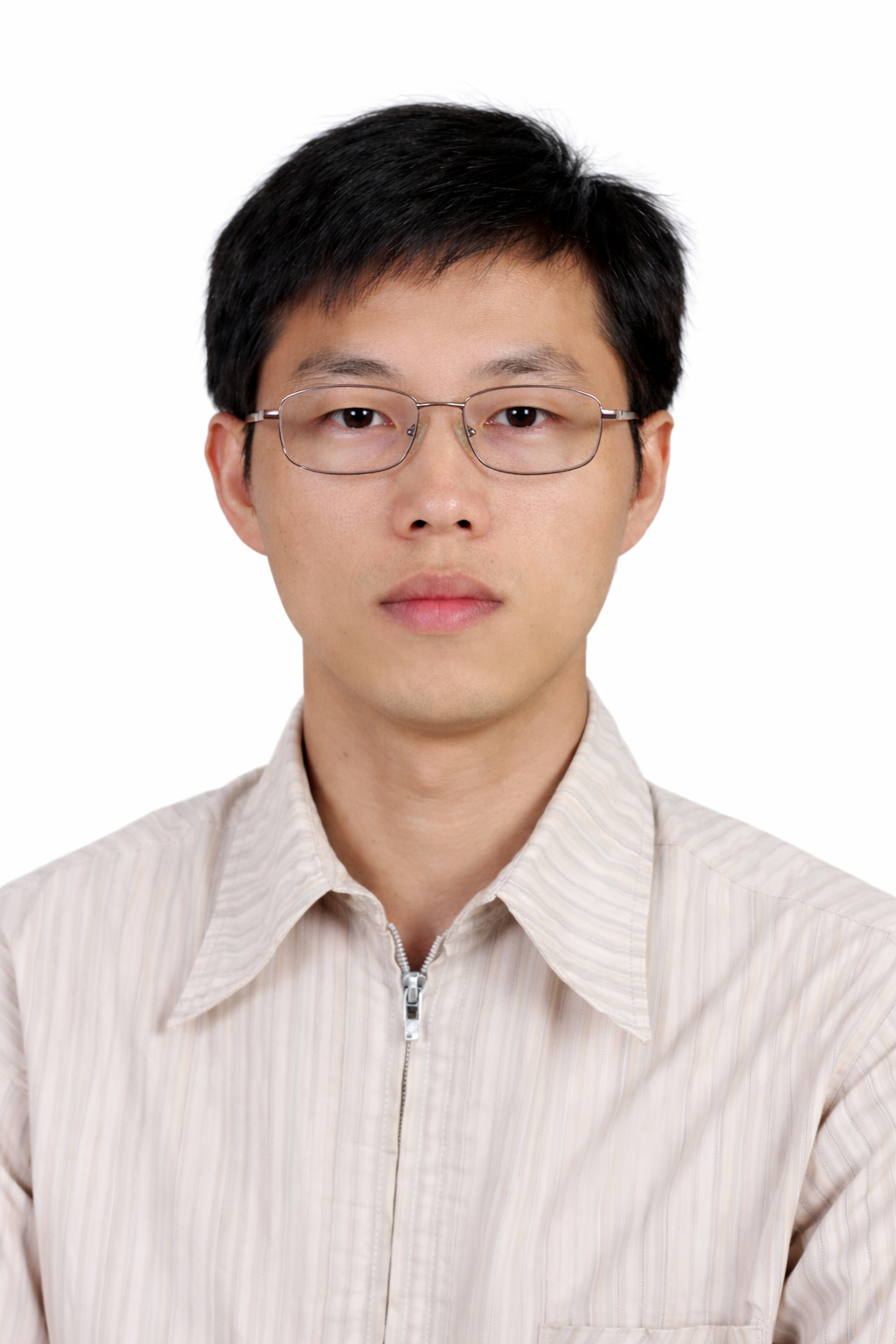
Research Highlights
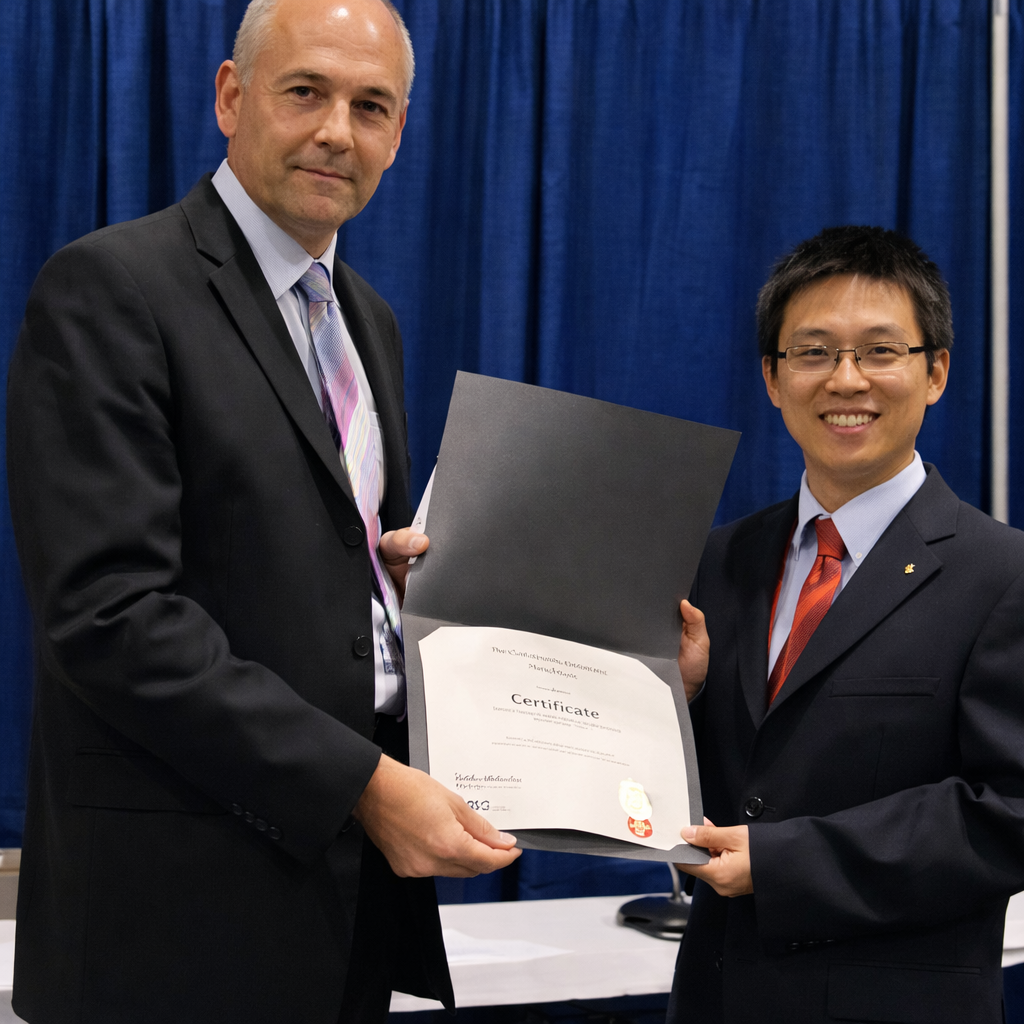
Dewen Cheng receives
2009 Kidger Scholarship Award
from Committee Chairman Andy Wood at
SPIE’s Optics+Photonics Conference,
2–6 August 2009,
San Diego, California
Dewen’s first project concerned the development of a comprehensive program using CODE V’s COM interface, which facilitates the design and analysis of optical systems with complex aperture settings (such as large telescopes with segmented mirrors).
Further research work has focused on the design, analysis, fabrication and testing of imaging systems with free-form surfaces (FFS). Dewen successfully designed and prototyped an extremely compact and light-weight optical see-through, head-mounted display (HMD) with a wide field-of-view and a large numerical aperture using an FFS prism composed of three XY-polynomial surfaces. He also designed a series of off-axis HMDs with a tilted free-form combiner and a miniature projector system with its light path folded by free-form mirrors to be used in a volumetric display system.
Besides his main work on free-form optical systems, Dewen also designed several conventional optical systems with rotational symmetry, including an all-plastic endoscope objective lens and a compact eyepiece with a large field of view and a large numerical aperture. The latter has been successfully manufactured.
Updates
2020
From August 2007 to August 2010, Dewen studied in the College of Optical Sciences at the University of Arizona as a joint PhD student, mentored by Dr. Hong Hua, and received a doctor’s degree in September 2011.
In 2012, he was selected into the “New Century Excellent Talents Support Plan” of China’s Ministry of Education. In 2013, he won the “Beijing Excellent Doctoral Dissertation” award, and In 2014, Dewen was selected into China’s “Top Talents Plan in National Defense”. Further, in 2018, he won the “National Excellent Youth Science Fund”. Dewen has published more than 80 papers in authoritative academic journals and conferences both in China and abroad, including Optics Express, Optics Letters, Biomedical Optics Express, and Applied Optics.
Dewen has declared more than 100 invention patents, including 13 international patents. As project Manager, Dewen has presided over more than 10 projects, including both the National Natural Science Foundation of China’s 863 and 973 Programs.
In 2015, Dewen founded Beijing Ned Ltd. which is specialized in the design, development, production and technical support of optical modules for augmented reality (AR) and virtual reality (VR) smart glasses with freeform optics.
2010
At the time of this update, May 2010, Dewen continues as a visiting student at the College of Optical Sciences, University of Arizona, but anticipates returning to Beijing Institute of Technology sometime soon to work as a research scientist.
“At present, I am working on a tiling, free-form prism eyepiece that helps to extend the field of view of a head-mounted display system while maintaining an acceptable resolution. Using the theory of canonical coordinates by H. H. Hopkins, I have proposed a method for the rapid and accurate fitting of wave aberration polynomials to optical systems without symmetry. I am also exploring control methods for local surface deformations to optimize free-form surfaces in imaging systems. In my current designs, I am using these control methods to further improve the performance of free-form imaging systems.”
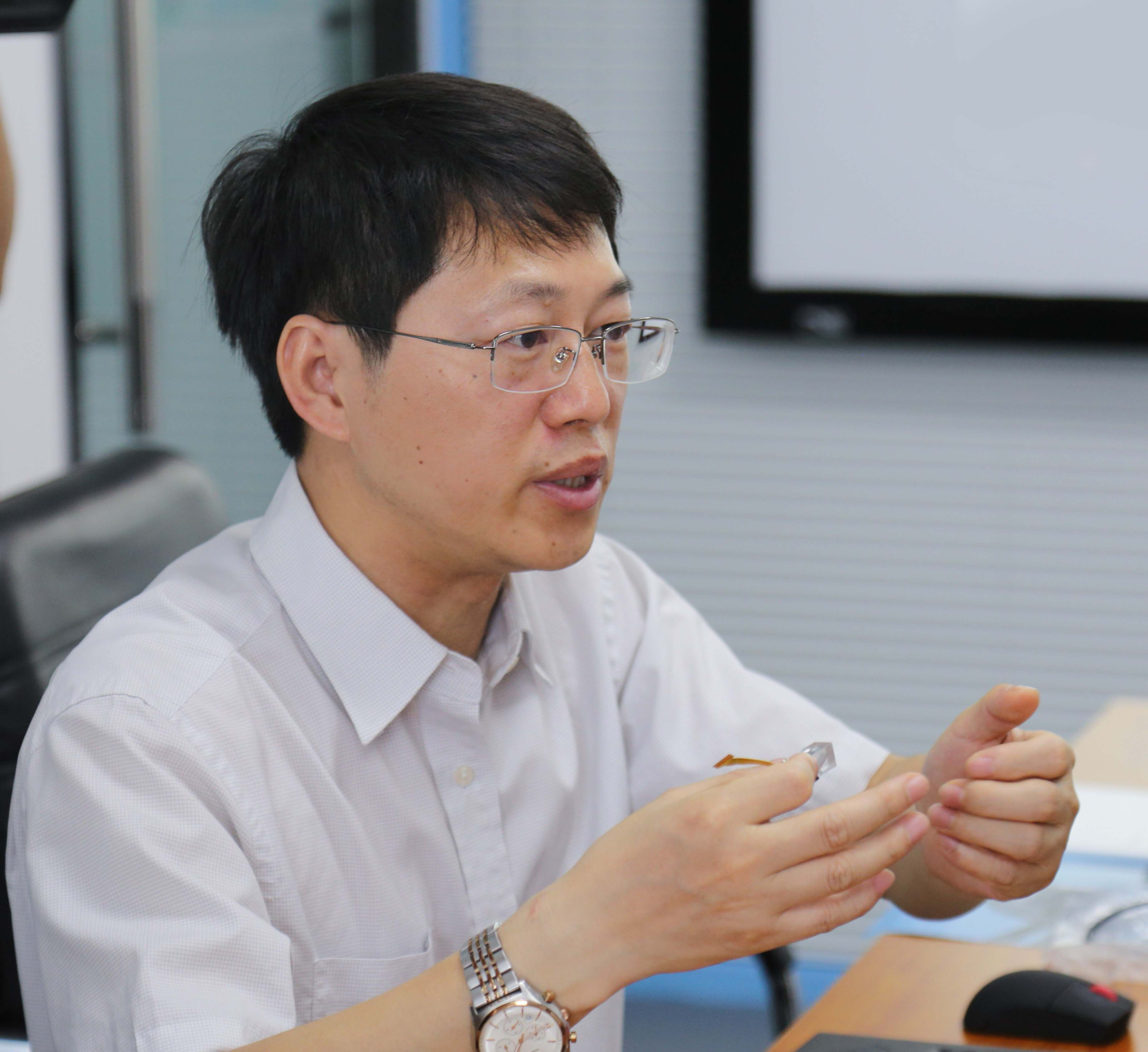
Dewen Chen
2019